
DEMONS NIGHT FEVER Guide: Combat Rules and Progression
DEMONS NIGHT FEVER centers on sacrificing abducted peons in grid battles, spending perverse points to increase stats, and clearing boss encounters within generous chapter time limits.
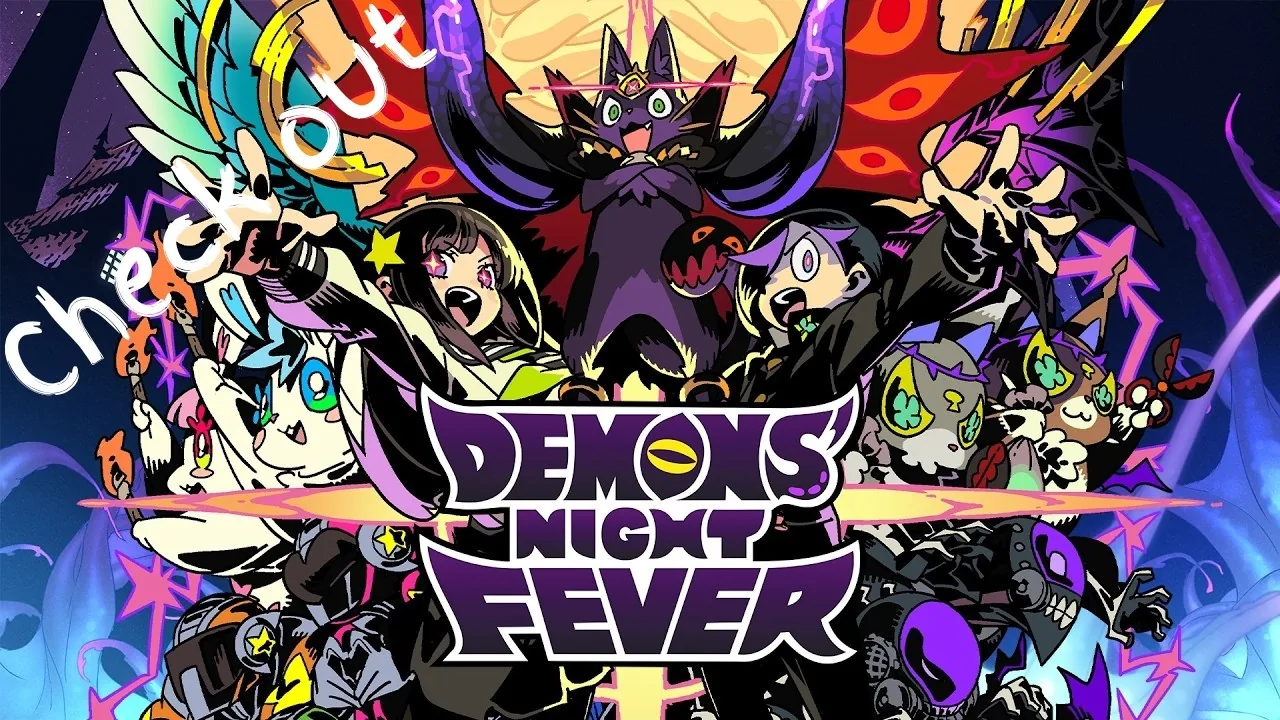
DEMONS NIGHT FEVER centers on sacrificing abducted peons in grid battles, spending perverse points to increase stats, and clearing boss encounters within generous chapter time limits.
Core Turn Order and Battlefield Mechanics
Combat takes place on a grid map with specific phase transitions. Every battle cycle rotates strictly through four distinct phases:
- Pawn Phase: Your summoned peons take actions automatically according to basic CPU orders. You do not issue direct movement commands to individual pawns during this phase.
- Player Phase One: You control your main unit, such as killshiro katanaka, spending an action point pool to move across tiles, teleport, or execute combat misdeeds.
- Enemy Phase: Opponents, including faction commanders like the Hero Rangers, position themselves and initiate attacks against your team.
- Player Phase Two: A second window opens for your main unit to reposition, deploy reinforcements, or detonate units before the cycle resets.
The protagonist deals little to no raw direct damage in the early campaign. Instead of depending on baseline basic attacks, damage output relies on positioning and the peon exploitation system. If an enemy unit defeats your peon, you receive penalties. Conversely, if you execute the peon yourself using a kill misdeed, you activate destructive effects while empowering subsequent reincarnations.
Tactical Exploitation and Detonation Skills
Peons serve as living ammunition rather than defensive frontline tanks. Each peon category carries a unique explosion shape and area of effect, ranging from single-tile crosses to wide radius circles and fixed percent-based health damage.
To trigger these detonations efficiently, the main character utilizes tactical misdeeds:
- Kill Misdeed: Targets an adjacent peon, executing the ally on the spot to activate specific kill skills that wipe out clusters of nearby foes.
- Teleport Misdeed: Instantly swaps places with a targeted peon across the grid. This allows you to dive into enemy clusters, drop a minion into critical range, and detonate them immediately.
- Strategic Deployment: If grid units are exhausted, you can summon reserve peons directly onto adjacent tiles within the allotted per-battle summoning quota.
| Unit Action | Optimal Battlefield Use | Operational Tradeoff |
|---|---|---|
| Direct Execution | Clustered enemy squads within blast ranges | Destroys the allied unit permanently for that encounter |
| Position Swap | Reaching distant backline commanders | Uses special action points and risks exposing the protagonist |
| Reserve Summon | Emergency crowd control near hostile formations | Consumes limited per-battle squad reinforcement reserves |
Defeated peons cycle straight into the Samsara Matrix. Repeated deaths cause pawns to reincarnate into stronger variants with enhanced combat efficiency for future sorties.
Base Management and Stat Raising
Outside grid skirmishes, progression flows through menu management driven by perverse points. You gain these points by committing sins and executing misdeeds during missions. Standard battles do not yield traditional character experience points; your main character level rises strictly by allocating points into five developmental styles.
- Cruelty: Raises maximum HP, physical attacks, and special attacks.
- Malice: Boosts physical attacks, physical defenses, and special defenses.
- Wrath: Enhances special attacks, physical defenses, and special defenses.
- Guile: Powers up maximum HP, physical attacks, and physical defenses.
- Obsession: Strengthens maximum HP, special attacks, and special defenses.
Physical offense forms the standard baseline for early progression. Investing in Cruelty, Malice, and Guile provides immediate status scaling, letting you handle rogue chests and utility targets without relying purely on minion bursts.
Recruitment and Chapter Progression
Maintaining your unit reserves requires conducting routine abductions between deployment sorties. The recruitment screen lets you acquire basic pawns alongside rare mythic peons possessing expanded blast templates.
During recruitment, bonus opportunities can appear. Taking a bonus abduction allows you to acquire extra minions simultaneously. However, unmitigated bonus abductions can fail, resulting in lost recruit yields. To secure high-grade recruits safely, you can offer existing low-grade peons as sacrifice decoys to guarantee successful capture rates.
Campaign stages feature a calendar tracking system where each chapter spans roughly 30 in-game days. Beating chapter bosses shifts the narrative setting completely, transitioning the party across scenarios from sentai villain clashes to rival witch encounters. Reaching chapter thresholds unlocks persistent perks, including expanded carryover inventories and permanent stat boosts up to 50 percent across repeated runs.